

What the two days mean
Many households remember children on November 1 and adults on November 2, though their calendar may begin earlier or use different customs. Families visit and decorate graves, eat together, tell stories and play music. There can be laughter. Food shared at a grave or at home is part of the day for many families; it doesn't have to sound like a hushed memorial service.
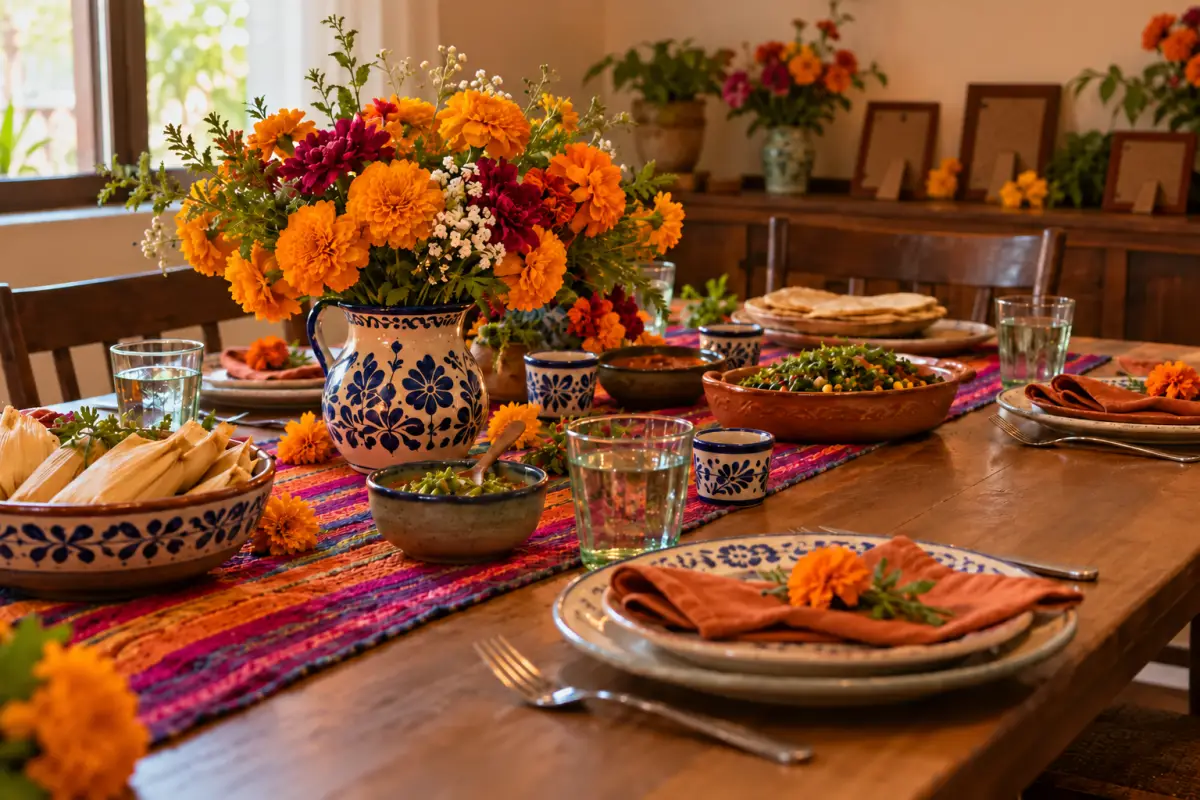
A home ofrenda is a table of offerings to welcome loved ones who have died. People may set one up at home and bring food or flowers to a cemetery too. If you're joining a family who keeps this tradition, ask them what they'll put on theirs before you move anything.
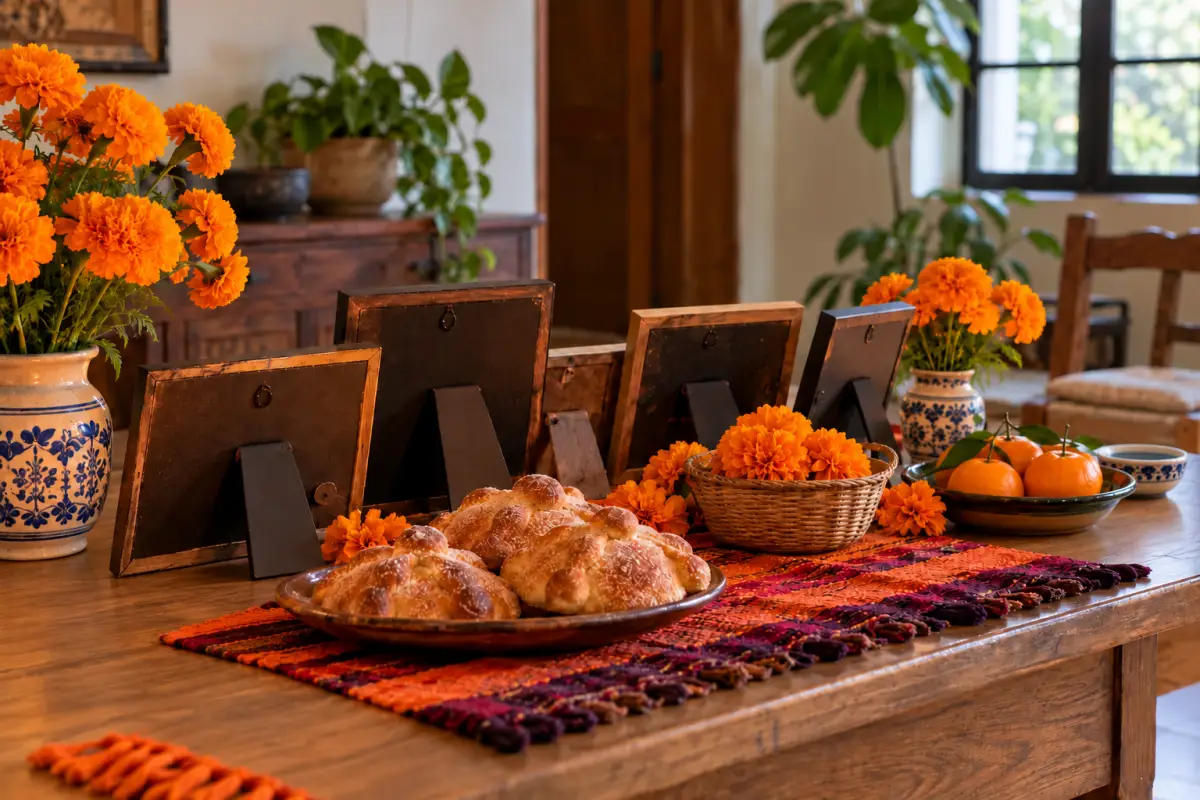
The table, item by item
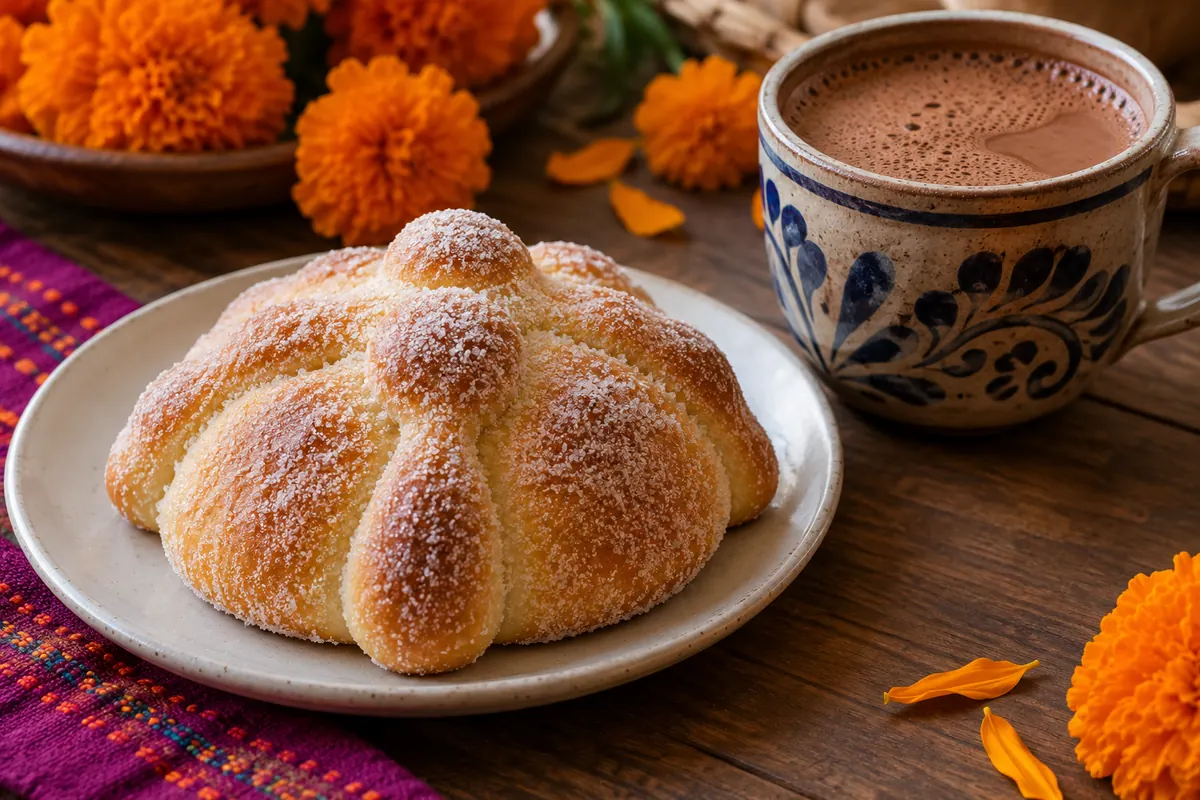
A photograph names the person. Candles light the path for returning spirits, and marigold petals and their scent are associated with guiding them. Water is for a spirit's thirst after the journey. Pan de muerto, a sweet bread, stands for earth and is eaten by the living too. Favourite dishes welcome the person through food they knew.
Papel picado, the cut paper, stands for wind. Copal incense carries prayers in its smoke. Sugar skulls hold death and sweetness together. These aren't Halloween props. A household may choose some of them, add its own objects, or leave others out. Learn what each means before decorating for someone else's observance.
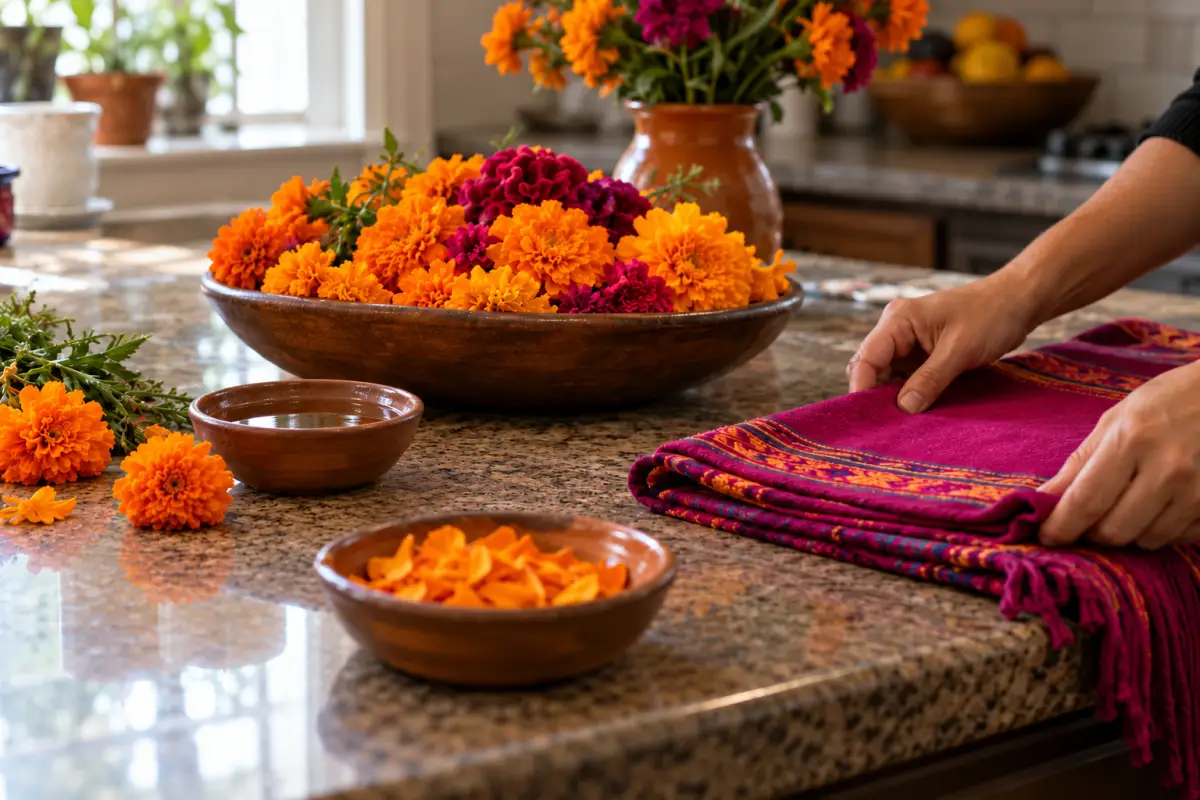
Use candles in sturdy holders, away from papel picado, cloth and flowers. An adult needs to watch lit candles and put them out before the last responsible adult leaves. Battery candles work when the room is crowded or children can reach the table.
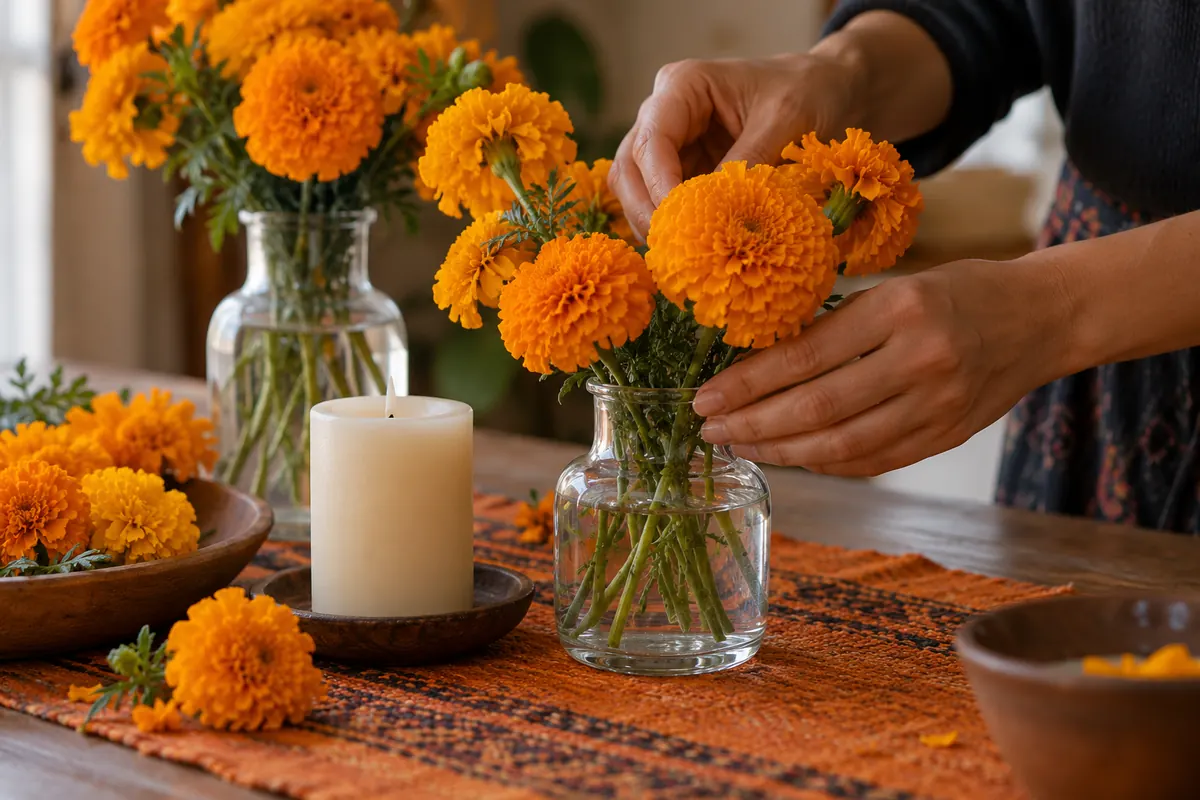
From today to Sunday
| Date | A doable job |
|---|---|
| Friday, October 30 | Ask who wants to gather and which day they keep. Invite people for Sunday afternoon or a Monday meal. |
| Saturday, October 31 | Ask relatives to bring a photo and a favourite dish if they want. Shop for bread, flowers, food and safe candle holders. |
| Sunday, November 1 | Set the ofrenda with the people keeping it. Put water out, receive dishes and share the afternoon. |
| Monday, November 2 | If this is your family's main day, share the meal or visit the grave on Monday instead. |
One invitation can say: We're remembering [name] on Sunday at 2:00 PM. Come for a meal and a story, and bring a photograph or a favourite dish if you'd like. Guests don't need an account to reply. Ask about allergies before anyone orders bread or cooks.
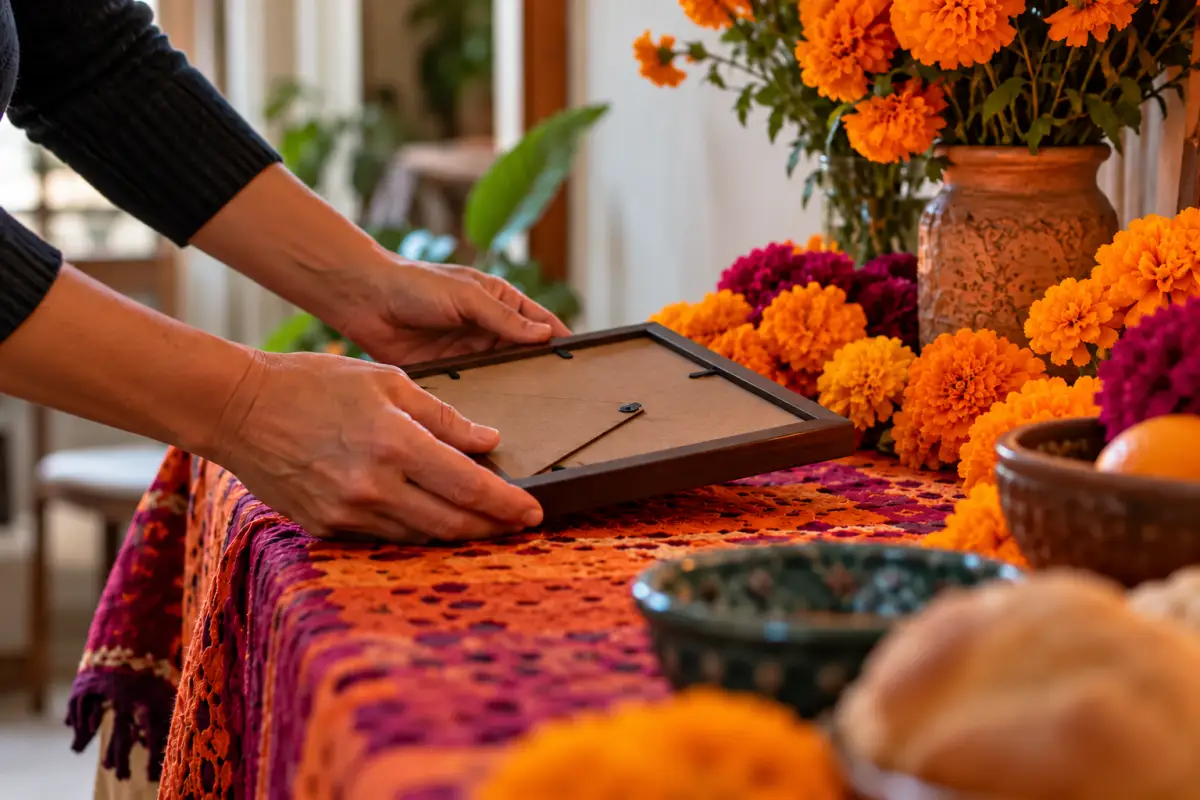
Buy food people want to eat together
For a meal with eight people, ask for eight main servings and a side people can share; double those counts for 16. That's our working meal number, not a custom. A relative's favourite dish is more meaningful than a generic menu. If you don't have a recipe, ask what they'd like to bring. Serve from the kitchen counter so the ofrenda has space for photographs and offerings.
| Have ready | 8 guests | 16 guests |
|---|---|---|
| Shared main and side, our working count | 8 servings of each | 16 servings of each |
| Pan de muerto | Ask the bakery how many a loaf serves | Ask the bakery how many loaves serve 16 |
| Marigolds | Enough for the vases or table you chose | Ask the flower seller for your setup |
| Water and cups | 8 cups with refills | 16 cups with refills |
| Plates, napkins and forks | At least 8 of each | At least 16 of each |
| Serving spoons | One per shared dish | One per shared dish |
| Candles and holders, if used | One holder per candle | One holder per candle |
Buy pan de muerto from a Mexican bakery if one is near you. Loaves vary, so ask how many slices theirs makes instead of assuming a size. Mexican flower sellers and makers may have marigolds and papel picado; buy what fits your table. If you aren't Mexican and want to host, invite people to remember someone, learn the meaning of what you set out, and listen to people who keep the tradition. Leave costumes and mixed-in Halloween decor out of it.
Food that needs refrigeration shouldn't sit out for a long visit. Keep cold dishes at 40 F or below and hot dishes at 140 F or above. Put perishable food away within two hours, or one hour above 90 F. A smaller serving dish is easier to refill than a table of food that stays out all afternoon.
Let the visit sound like the people there
A Sunday visit from 2:00 PM to 4:00 PM can work for friends or relatives who have Monday commitments. Leave time to look at the photographs, then eat. People may tell stories, sing, play music or talk about something ordinary. Don't make everyone speak in turn. If the household visits a grave, ask how you can help carry food or flowers.
Keep borrowed photographs with their owners' names so they go home safely. Ask before sharing a picture of the table online. If someone who keeps this tradition can read the invitation and the setup plan before guests arrive, take their corrections.
Questions
Can someone outside the tradition host?
You can bring people together to remember someone. Learn the objects' meanings first, buy from Mexican bakeries and makers where you can, and ask a person who keeps the tradition to read your plan.
How much pan de muerto do we need?
Ask the bakery how many people its loaf serves. Sizes vary, so don't buy by an assumed slice count.
Start with the call today
Find out who is being remembered, which day people keep, and whether Sunday or Monday works. Then send the invitation. The guest count and food numbers can be adjusted with the tools below.
Host checklist
Your ticks are saved in this browser. No account needed.
Sources
- UNESCO, Indigenous festivity dedicated to the dead
- Dominican University, Día de los Muertos ofrendas
- Smithsonian National Museum of the American Latino, meaning of the altar
- Rutgers University, Day of the Dead symbolism
- National Geographic Kids, Day of the Dead
- PBS NewsHour, Day of the Dead and Halloween
- Texas A&M AgriLife, potluck food safety