

Seven days, seven principles
The first day, December 26, is Umoja, unity. December 27 is Kujichagulia, self-determination. December 28 is Ujima, collective work and responsibility. December 29 is Ujamaa, cooperative economics. December 30 is Nia, purpose. Karamu falls on December 31, Kuumba, creativity. January 1 is Imani, faith. The greeting 'Habari gani?' is answered with that day's principle. You don't have to make seven parties out of seven days. Name the principle for the evening you invite people to.
Kwanzaa was created in 1966 by Dr. Maulana Karenga as an African American and Pan-African holiday of family, community and culture. Guests who aren't Black can attend. The community celebrating it leads the ceremony. If you're helping to host, provide the room, guest count and meal plan.
Set the Kwanzaa table without crowding it
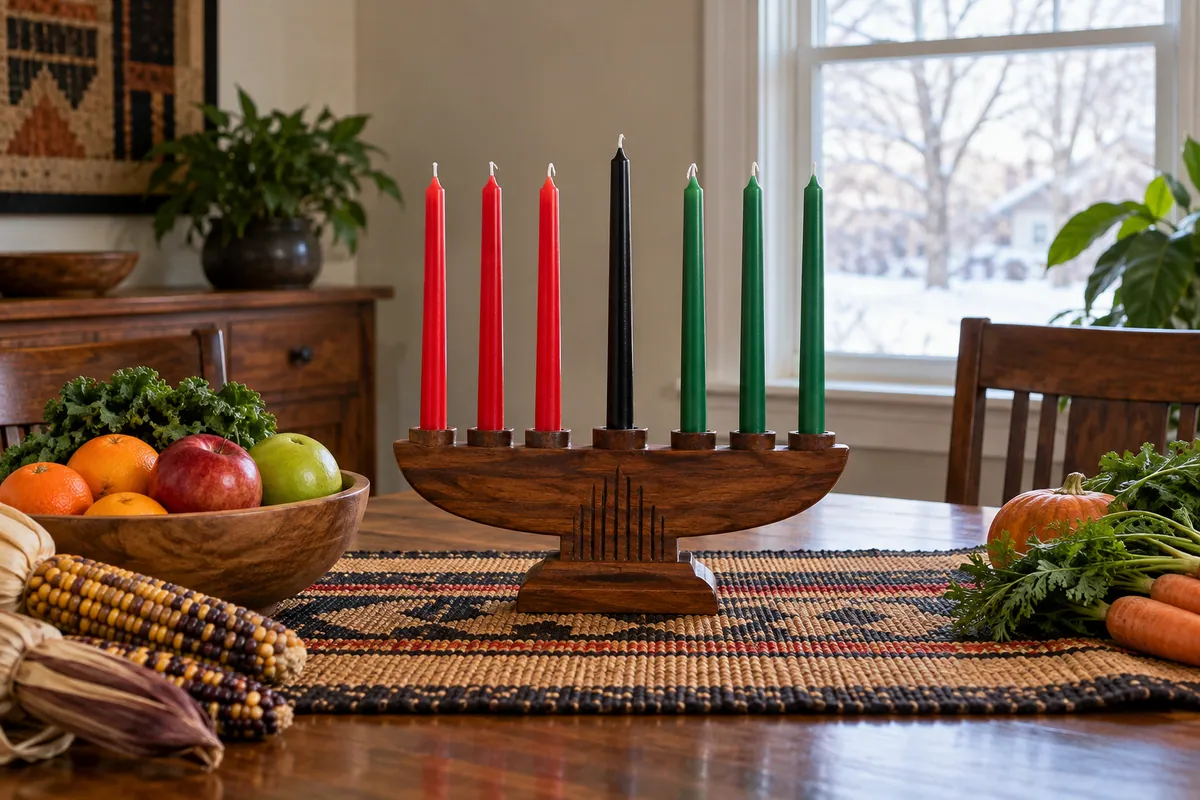
Spread African cloth over a table and put the mkeka, or mat, on it. The kinara sits on the mat. Its black candle goes in the centre, three red candles on its left and three green on its right. Put fruit and vegetables, the mazao, in a plain basket or bowl. The muhindi, corn, stands for children and the future. Even a household without children can place an ear on the mat. The kikombe cha umoja is the unity cup. Gifts, or zawadi, are mainly for children and traditionally given January 1. They include a book and a heritage symbol. Check that you have the mat, kinara, seven candles, crops, corn, unity cup and gifts before buying decorations.
Light the black candle first on December 26. Agree on the later candle order with the person leading the observance and put it on the program before guests arrive. For the December 31 meal, leave the seven candles unlit until the leader is ready. Black represents the people, red their struggle, green the future and hope.
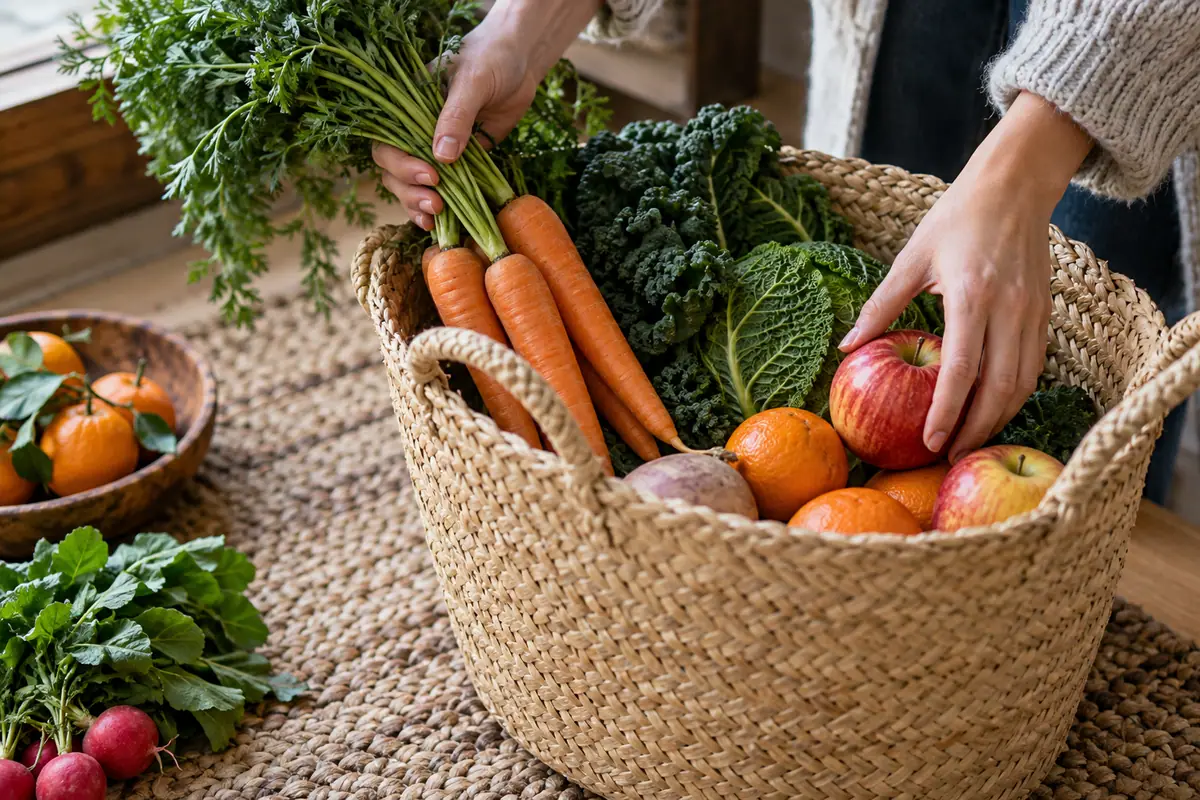
The cloth and woven mat are for the Kwanzaa setting, so leave the kinara unlit there unless the flame can have a clear, heat-resistant position. A lit candle needs at least 12 inches from cloth, paper, produce leaves and anything else that burns. Keep candles at least 3 inches apart in sturdy holders. If that spacing won't fit the kinara and table, use battery candles. Assign one adult to watch any real flame through food service. That adult uses a snuffer and checks every candle before leaving the room.
The Karamu needs a program and a cook
A suggested order begins with welcome and recognition of guests and elders, then remembering, recommitment, cultural expression and rejoicing. A water libation, the unity cup and names of ancestors and Black heroes come before the feast and farewell. The person leading chooses the words and sequence. Give that person the kitchen timetable; a separate cook handles the food.
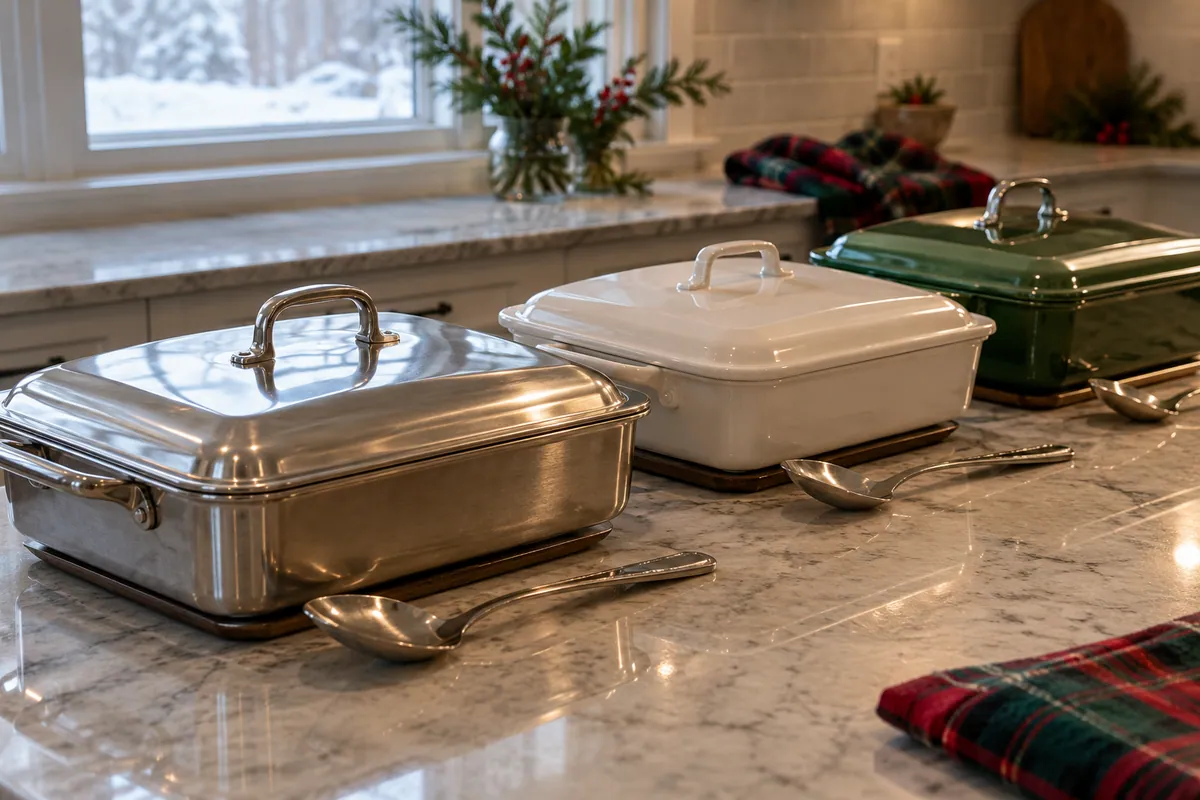
Invite guests for 5:30 PM, begin the program at 6:00 and serve at 7:00. Keep dishes covered until the meal. Hold cooked pans at 140 F or above while the oven finishes later batches; keep cold food at 40 F or below. Check with a thermometer. Use small platters that can be replaced as guests serve themselves.
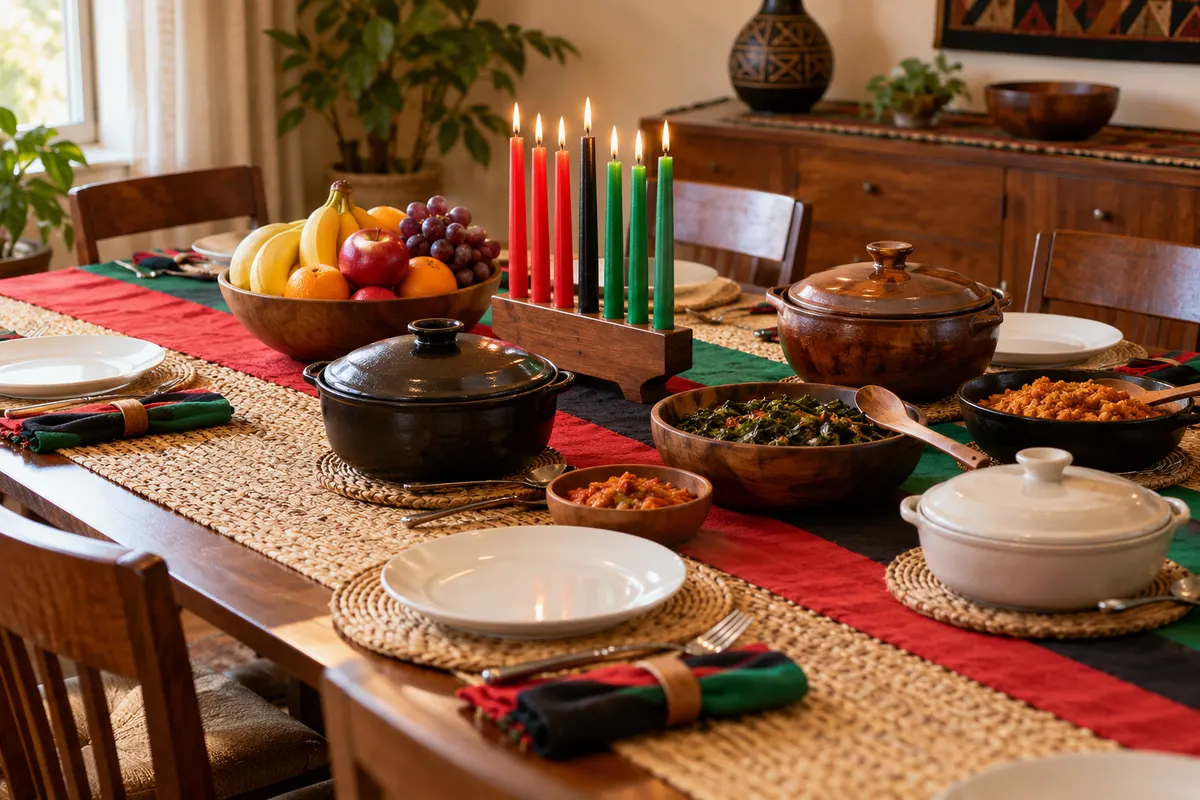
At a communal feast, food may be laid out for self-service on a large central mat. In a home with a narrow dining room, keep the symbolic mat visible and serve food from a separate counter if that gives guests a clear route. Have one person refill water and another swap food dishes. The host should know who returns the unity cup and who clears the food before guests arrive.
Give every Karamu dish a serving count
Choose dishes your household cooks and write each recipe's yield on the shopping list. For a four-serving main, make three batches for 12 people, five for 20, and eight for 30. The last gives 32 portions. At 3/4 cup of a cooked side per plate, prepare 9, 15 or 22 1/2 cups. A recipe producing 6 cooked cups needs two, three or four batches.
| Meal count | 12 guests | 20 guests | 30 guests |
|---|---|---|---|
| Main, one serving each | 12 | 20 | 30 |
| Four-serving main batches | 3 | 5 | 8 |
| 45-minute oven rounds if two pans fit | 2 | 3 | 4 |
| Cooked side at 3/4 cup each | 9 cups | 15 cups | 22 1/2 cups |
| Six-cup side batches | 2 | 3 | 4 |
| Water at one 8 fl oz glass each | 96 fl oz | 160 fl oz | 240 fl oz |
| Dinner plates and cups | 12 each | 20 each | 30 each |
Count the fruit for the symbolic produce bowl separately from fruit to serve. Write each hot dish's pan size and holding space on the kitchen list. A 9 by 13 inch pan that makes eight portions needs two pans for 12, three for 20, four for 30. Put a serving spoon with each pan.
Questions
Does Kwanzaa replace Christmas?
No. Kwanzaa is not a religious holiday and does not replace Christmas.
Prepare the feast and the seven days
| When | Host job |
|---|---|
| Five weeks out [November 26, 2026] | Agree on the Thursday Karamu and who conducts the program. Invite the guests. |
| Two weeks out [December 17, 2026] | Count chairs, choose recipes with yields and check the kinara and mat. |
| One week out [December 24, 2026] | Close replies, assign one cook and one candle watcher, then buy shelf-stable supplies. |
| The night before [December 30, 2026] | Clear the table, lay out seven candles unlit and label the serving dishes. |
| Feast day [December 31, 2026] | For 30 guests, start four 45-minute oven rounds at 3:30 PM and finish hot food by 6:30 for a 7:00 meal. |
Two pans per oven round means eight four-serving batches take four rounds. At 45 minutes each, start at 3:30 to finish by 6:30, allowing extra time to preheat. If the recipe takes an hour per round, start at 2:30. End the guest visit at 8:30 and refrigerate leftovers promptly. Cover the symbolic table after the program ends.
First, agree on who will lead the Karamu and choose a main recipe with a measured yield.