

Use the calendar for your city
Makar Sankranti marks the Sun's move into Capricorn and its northward journey. Pongal is a Tamil harvest festival, and its name means boiling over. The cited calendars list Thursday, January 14 for Sankranti and Thai Pongal in New York and Friday, January 15 in New Delhi. Put the city and date on the invitation.
For a US household observing all four Pongal days, Bhogi is Wednesday the 13th, Thai Pongal Thursday the 14th, Mattu Pongal Friday the 15th, and Kaanum Pongal Saturday the 16th. Bhogi includes clearing and decorating the house in many households. Mattu Pongal honours cattle. Kaanum is a visiting day. Your Thursday meal doesn't need to compress four days into one morning. For this meal, name the Tamil celebration and menu on the invitation.
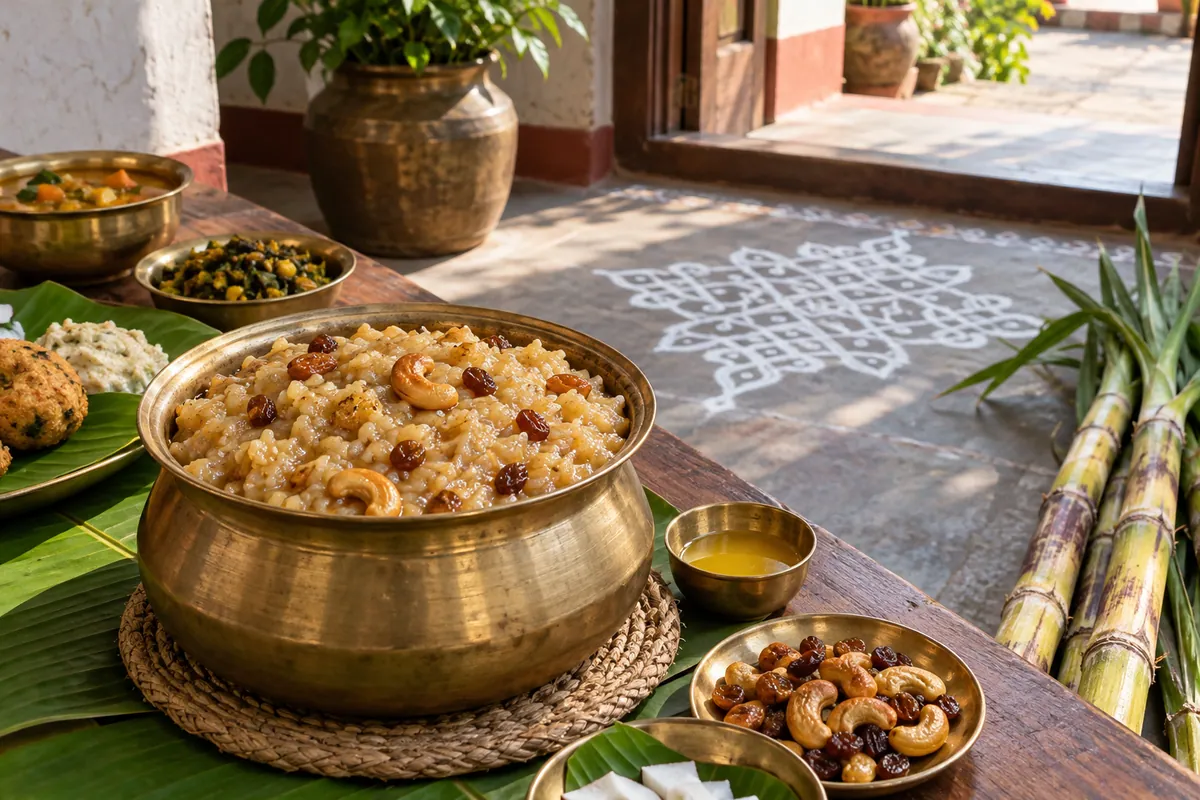
Clear a place for the kolam and the pot
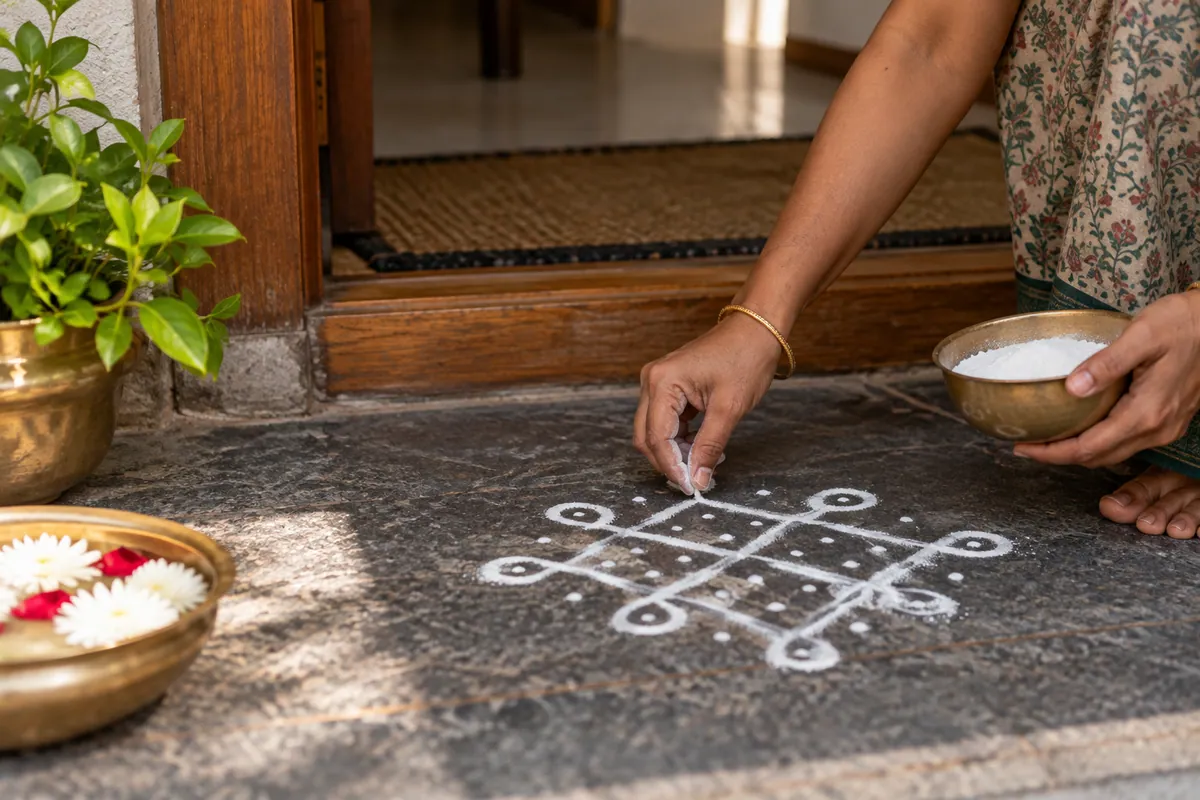
A kolam is rice-flour floor art, often geometric lines around a dot grid at the entrance. Put it beside a door where it can be seen without forcing guests to step through the work area. Measure a clear route from entrance to table before you set serving dishes down. Sketch the kolam on paper and measure its space before putting flour by the door.
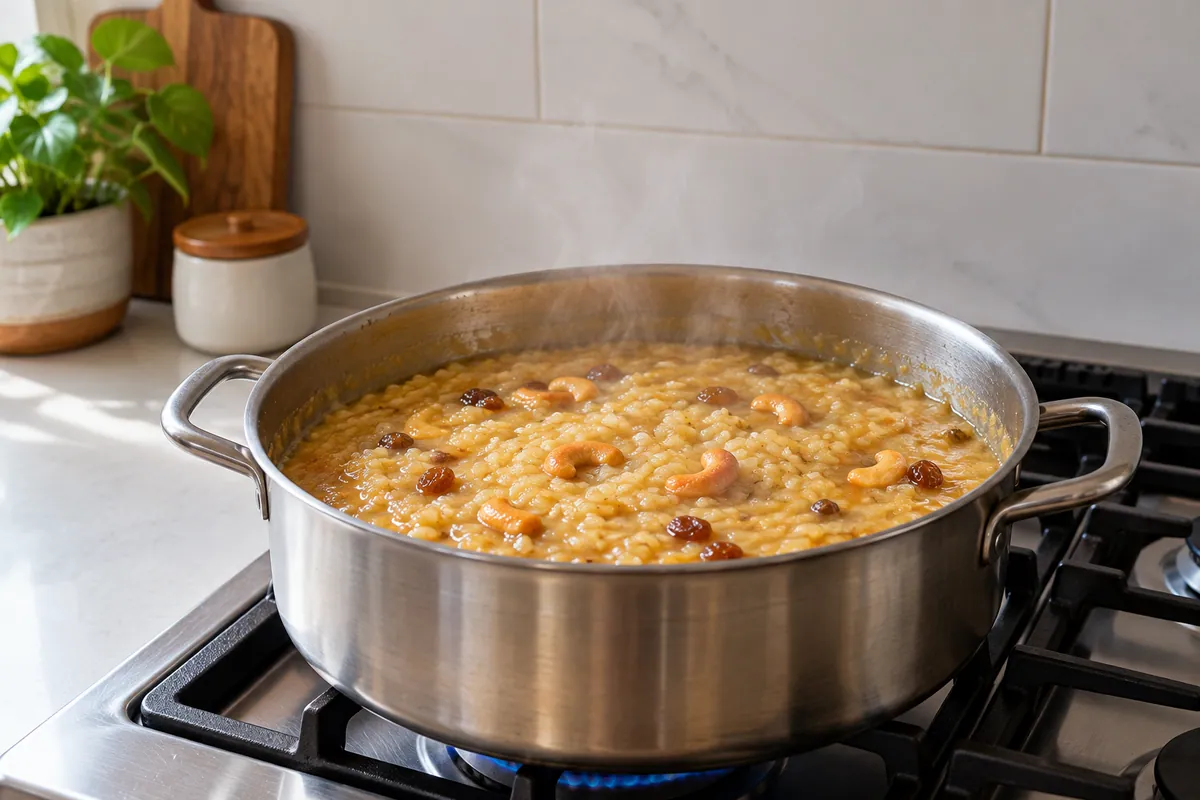
Sweet pongal uses rice cooked with milk and jaggery or cane sugar, with ingredients such as coconut, ghee, cardamom, raisins and cashews. In a traditional outdoor setting the pot is cooked in sunlight and allowed to boil over, with 'Pongalo Pongal' called as it does. At home, use the method the cook knows. Keep an indoor pot from overflowing onto the burner and leave dry towels away from the heat. If your household includes an offering to Surya and Ganesha, place it before the first serving.
Make two dishes with different jobs
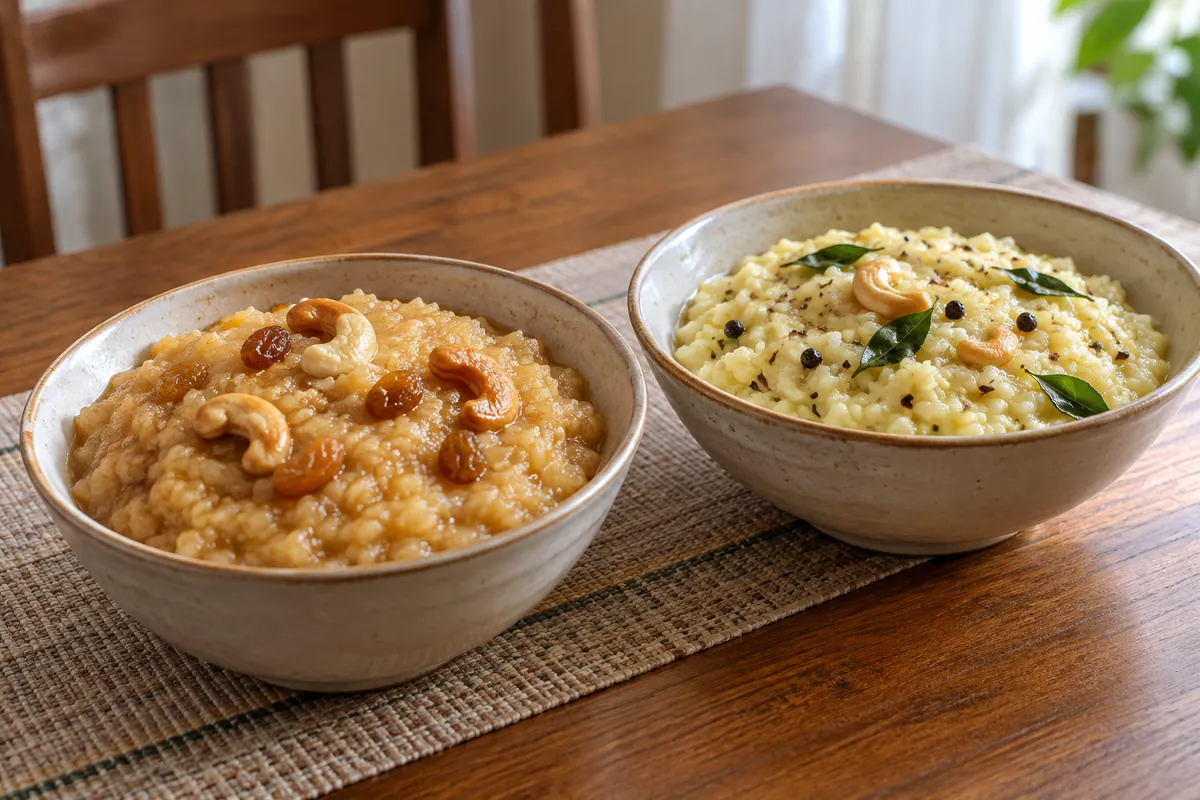
Sweet pongal is the dish associated with boiling over and the call of 'Pongalo Pongal.' Savoury pongal can be a second dish. Use the cook's known recipe and label its ingredients for guests. Give each dish its own spoon and serving vessel. Hold cooked batches at 140 F or above while the pots are reused.
Allow one cooked cup of each pongal per guest. Twelve guests need 12 cups of each dish, 20 need 20 and 30 need 30. At five cups per sweet batch, make three, four or six batches. At six cups per savoury batch, make two, four or five. Cook one batch before scaling up and record its actual yield and time.
| Lunch count | 12 guests | 20 guests | 30 guests |
|---|---|---|---|
| Sweet pongal at one cup each | 12 cups | 20 cups | 30 cups |
| Five-cup sweet batches | 3 | 4 | 6 |
| Savoury pongal at one cup each | 12 cups | 20 cups | 30 cups |
| Six-cup savoury batches | 2 | 4 | 5 |
| Bowls and spoons | 12 each | 20 each | 30 each |
| Water at one 8 fl oz glass | 96 fl oz | 160 fl oz | 240 fl oz |
Buy milk, rice and jaggery from the tested recipe yield and the batch counts in the table. Label cashews and milk on the sweet pongal serving card.
The morning timetable belongs to the cook
| When | Job |
|---|---|
| Five weeks out [December 10, 2026] | Invite guests to arrive at 11:00 AM for an 11:30 meal. |
| Two weeks out [December 31, 2026] | Choose the two recipes and measure each cooked yield and pot capacity. |
| One week out [January 7, 2027] | Close replies, scale ingredients and count bowls. |
| The night before [January 13, 2027] | Clear the entry, wash the serving vessels and set the kolam supplies aside. |
| Lunch day [January 14, 2027] | If each sweet batch takes 45 minutes, start six batches at 6:15 AM and finish at 10:45. Welcome at 11:00; serve at 11:30. |
If each sweet batch takes 45 minutes, six batches take 270 minutes on one burner. Start at 6:15 AM to finish at 10:45. The five savoury batches can run on a second burner. If sweet batches take an hour, start at 4:45. If that start is too early, add a cook and a burner or serve fewer guests. Reserve holding vessels for finished batches. Give the kolam to someone who is not stirring a pot.
In Maharashtra, some Sankranti gatherings exchange til-gul, sesame and jaggery sweets. In Gujarat, undhiyu and chikki are options. Keep those regional menus separate from this Tamil lunch unless the hosts are intentionally serving both.
A six-serving pan of a chosen vegetable side needs two pans for 12, four for 20 and five for 30. Five pans produce 30 portions exactly. Buy one extra pan if you want six spare portions. Put the side on the shopping list only after someone has agreed to make it. A vegetable side needs its own burner or oven slot, a spoon and a place for its serving vessel. On the night before, put sticky notes with dish names on the clean counter so helpers know where each pot lands in the morning.
If you are also marking Bhogi on Wednesday, finish the house clearing then. A Bhogi fire needs the same local permission and outdoor clearances as any open fire. It isn't a reason to burn household rubbish in a backyard. For the Thursday meal, set sugarcane beside the serving table if it belongs to this household's practice. Keep the stalk out of the walking route and leave enough room to lift a hot pot with both hands.
First, choose the sweet pongal recipe and test one batch before ordering ingredients.