

Pick the shape before asking for dishes
An open house and a potluck dinner ask different things of guests. For an open house, give a start and end time and put out food in small batches. People can arrive when their family plans allow. For a sit-down meal, write down the meal time and who needs a chair. If you're combining them, say which part is drop-in and when the meal starts. A guest bringing a roast can't guess from 'come by anytime.'
Thursday, December 24 may already be a family night for some guests. For a mixed group, write: 'Drop in from 3:30 to 7:30 PM. Dinner is at 5:30. You're welcome whether or not you celebrate Christmas.' Name prayers, gifts or music if they're planned. A guest can choose the part that fits without explaining why.
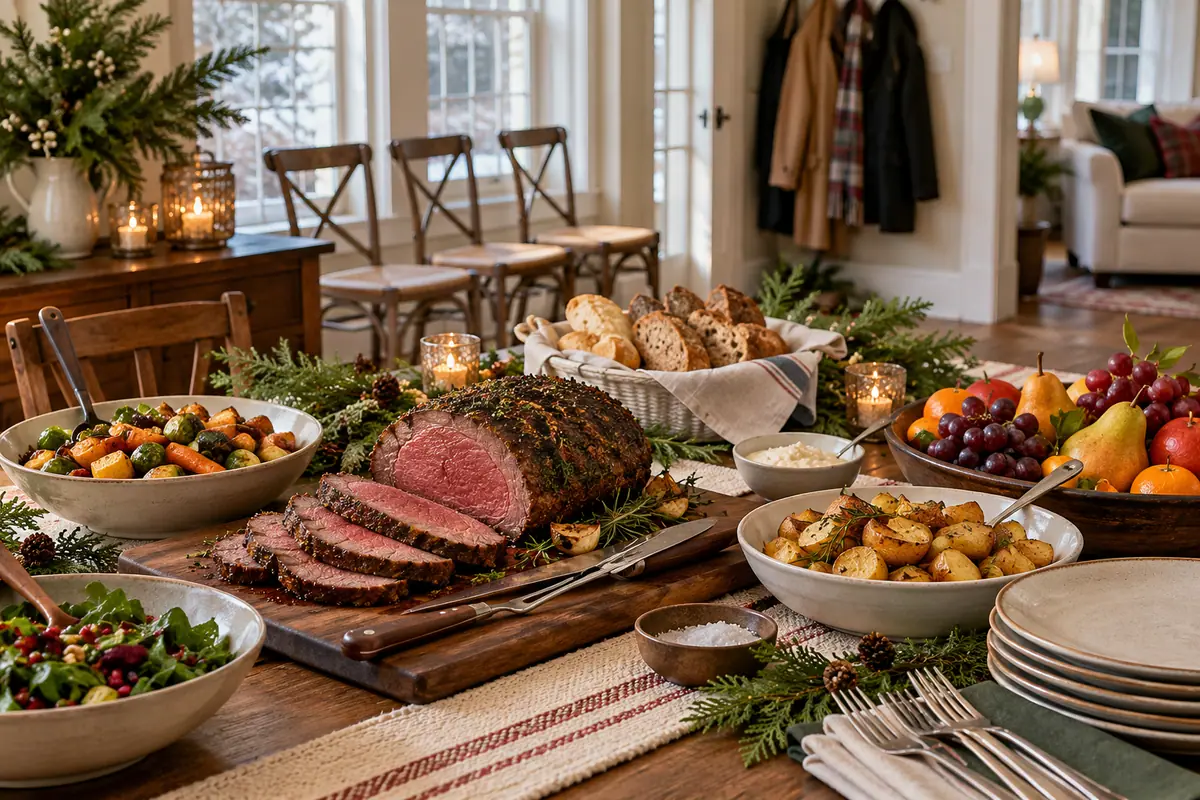
List the dishes people offer, with each cook's serving count and ingredients. A guest who brings an everyday family recipe doesn't need to explain its origins. Put the dish name, ingredients and serving utensil together at the table.
Before the December meal
| Date | A decision or job |
|---|---|
| Seven weeks out | Choose Christmas Eve or Day and invite people with the meal and drop-in times. |
| Three weeks out | Count roast eaters and people choosing the other main; name each food contributor. |
| One week out (December 17 for Eve; December 18 for Day) | Close dish claims. Record serving count, pan size, oven temperature and reheating time. |
| The night before | Clear refrigerator shelves and test the empty roasting pan and reheating pans in the oven. |
| Meal day (December 24 or 25) | Cook to temperature, time each tray and refrigerate leftovers promptly. |
A 5:30 PM meal means the roast owns the oven until it comes out. Give every other oven dish a pan size, temperature, start and finish time before accepting it. If a side needs the same oven at 4:30, change the side to bread or something that needs no oven. For a Friday meal, shop Thursday if the stores you use will be closed.
Put a name beside every part of the meal
For a potluck, start with mains, then fill in vegetables, bread, dessert and drinks. For 20 dinner guests, if six choose the other main, plan 14 roast portions and six portions of that dish. A pan with six vegetable servings and another pan with twelve bread servings are different sides. They don't add up to eighteen complete meals. Write the cook and yield beside each dish. Keep its ingredients with the dish when it arrives.
| Working meal count | 12 guests | 20 guests | 30 guests |
|---|---|---|---|
| Roast portions in this split | 8 | 14 | 21 |
| Other main portions | 4 | 6 | 9 |
| Bone-in roast at 3/4 lb per roast eater | 6 lb | 10 1/2 lb in two roasts | 15 3/4 lb in two roasts |
| Dinner plates | 12 | 20 | 30 |
| Bread at two pieces each | 24 pieces | 40 pieces | 60 pieces |
| Water at 8 oz each | 96 oz | 160 oz | 240 oz |
Collect allergies and ingredient needs privately. Put a serving spoon with each dish and a separate utensil where a guest needs it. If a contributor drops out, replace that named slot. The roast weights use three quarters of a pound of raw bone-in meat for each roast eater as this shopping plan. For 20 or 30, split it into two roasts within the four-to-eight-pound timing range, then check whether both pans fit your oven with air around them. If they don't, choose another main or a second oven.
If a guest offers pan dulce, lussekatter or latkes, give that dish the same space as anything else. Write down what each cook actually offers, its ingredients and how many people it serves. If someone offers a fish dish for Christmas Eve, give it its own serving utensil and the same timed holding plan as other perishable food.
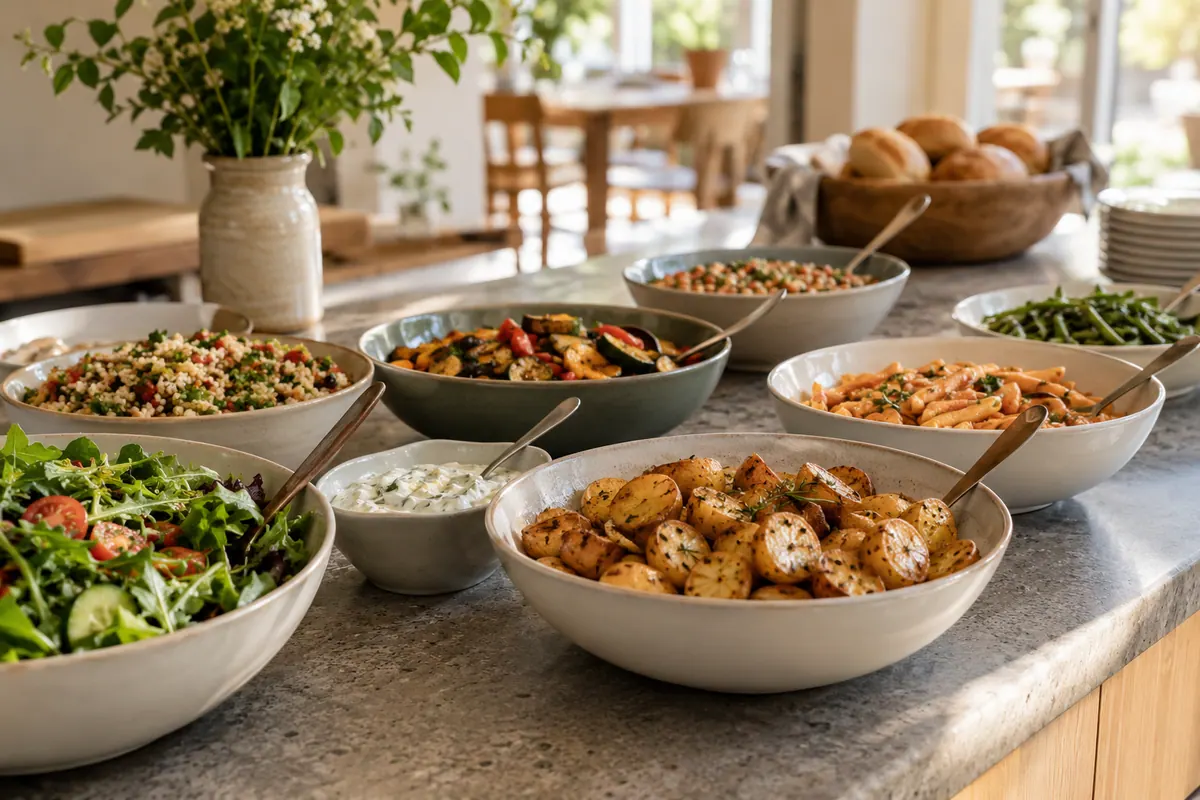
Use a thermometer for the roast
For a beef roast or fresh ham, use 145 F at the center with a three-minute rest. Use the thermometer, not the clock or the colour of the meat, to decide when it's done. A fully cooked ham has different reheating directions. Read its label before setting the oven time. Reheat leftover or repackaged ham to 165 F. If a guest brings the ham, ask them what they bought and who is responsible for checking the temperature.
For a six-pound bone-in rib roast at 325 F, the published planning range of 23 to 30 minutes per pound means 138 to 180 minutes, or 2 hours 18 minutes to 3 hours. For a 5:30 PM meal, preheat before 2:00 PM, put the roast in at 2:00 and begin checking the center early. The thermometer decides when it comes out. If it reaches temperature by 5:00, take it out, rest 20 minutes and carve at 5:20. Three minutes is the safety minimum; twenty helps it slice. If the roast isn't at 145 F by 5:00, move the meal time and tell guests. The time range cannot promise doneness.
| Clock for a 5:30 PM meal | Oven or table job |
|---|---|
| Before 2:00 PM | Preheat the oven to 325 F; keep other pans out. |
| 2:00 PM | Put the six-pound bone-in rib roast in. |
| 4:18 to 5:00 PM | Planning range for reaching temperature; check the center with a thermometer. |
| 5:00 to 5:20 PM | Rest the roast and use the free oven for a side only if its written reheating time fits. |
| 5:20 to 5:30 PM | Carve and serve; start the platter timer when it leaves temperature control. |
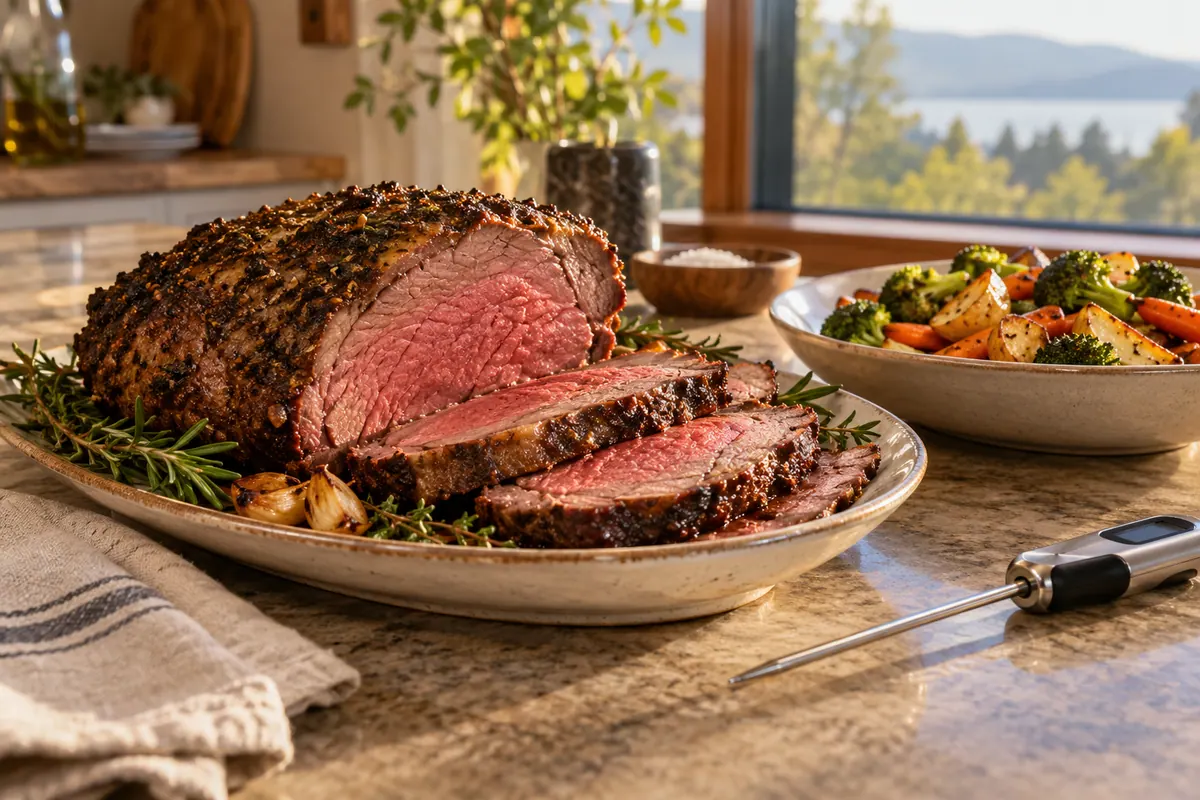
Put perishable food out in small dishes. Start a phone timer when each platter first leaves hot or cold holding, including any travel time it spent unchilled. Keep hot food at 140 F or above and cold food at 40 F or below. At two hours outside that control, discard what remains. Use one hour if the air is above 90 F. Refrigerate safe leftovers in shallow containers within two hours and use them within four days. Give one helper the timers while you greet people.
Leave room for guests who keep a different day
Some guests will celebrate Christmas elsewhere. Some won't celebrate it at all. An invitation shouldn't assume either group wants a gift exchange or a church service. Name the food, the time and any planned observance. A person can then decide what to attend without a surprise. Put it in the invitation: 'Food at 5:30, no gifts, no prayers, home by 7:30,' if that is the plan.
Give people a choice of how to help. Someone who doesn't want to cook might bring a drink, stack plates or take leftovers home. If the group shares several family food traditions, ask the cooks what dishes matter to them and keep those names. Label each dish with its own name and ingredients. Put each dish's name, ingredients and serving utensil where guests can see them.
Send a meal plan guests can answer
The invitation needs a date, arrival window, meal time if there is one, and a reply date. Ask food contributors for a dish and yield, then count the people who'll eat each main. Keep the address and private food notes in the invitation rather than a public menu list.
Questions
Can people drop in without taking a seat at dinner?
Yes, if the invitation gives a drop-in window and a separate meal time. Count only meal guests when ordering the roast.
What if the potluck ham arrives cold?
Read its label and check how long it has been outside temperature control. A plant-packaged fully cooked ham has different reheating directions from a leftover or repackaged ham, which needs 165 F. If its safe time or packaging cannot be established, leave it off the buffet.